
The Calcasieu Parish Multi-Day Police Blotter
KPLC's Crime section gives the parish its steadiest multi-day news blotter. The "SWLA Arrest Report" articles usually recap the prior day's Calcasieu Correctional Center bookings. Weekday items tend to land the next morning. Sunday activity often waits for a Monday report. That rhythm offers a wider view than a single live-roster check of recent arrests. KPLC is not CPSO, though. Its articles form no complete custody ledger. A person may already be released, or a charge may change. An article can also stay online after the roster entry is gone. Calcasieu.info and American Press run their own dated arrest report formats. Each remains a secondary publication.
How to Read Calcasieu Parish Arrest Reports
Sort by publication date first, then by booking date, since the two rarely match. From there, move from the news lead to official custody and court sources.
- Open KPLC Crime and locate dated “SWLA Arrest Report” items.
- Read the article date and identify the prior-day period it covers.
- Compare name, age, city, and charges, taking care with similar names.
- Check the CPSO roster for current custody. An absent result does not disprove an earlier booking.
- Use the Clerk's criminal index and dockets for later case activity.
- For older reports, ask the custodian of the booking, incident, or court record.
When the question is whether someone was just booked, the same-day arrest page fits better. The KPLC Crime page lists the parish's running arrest coverage.
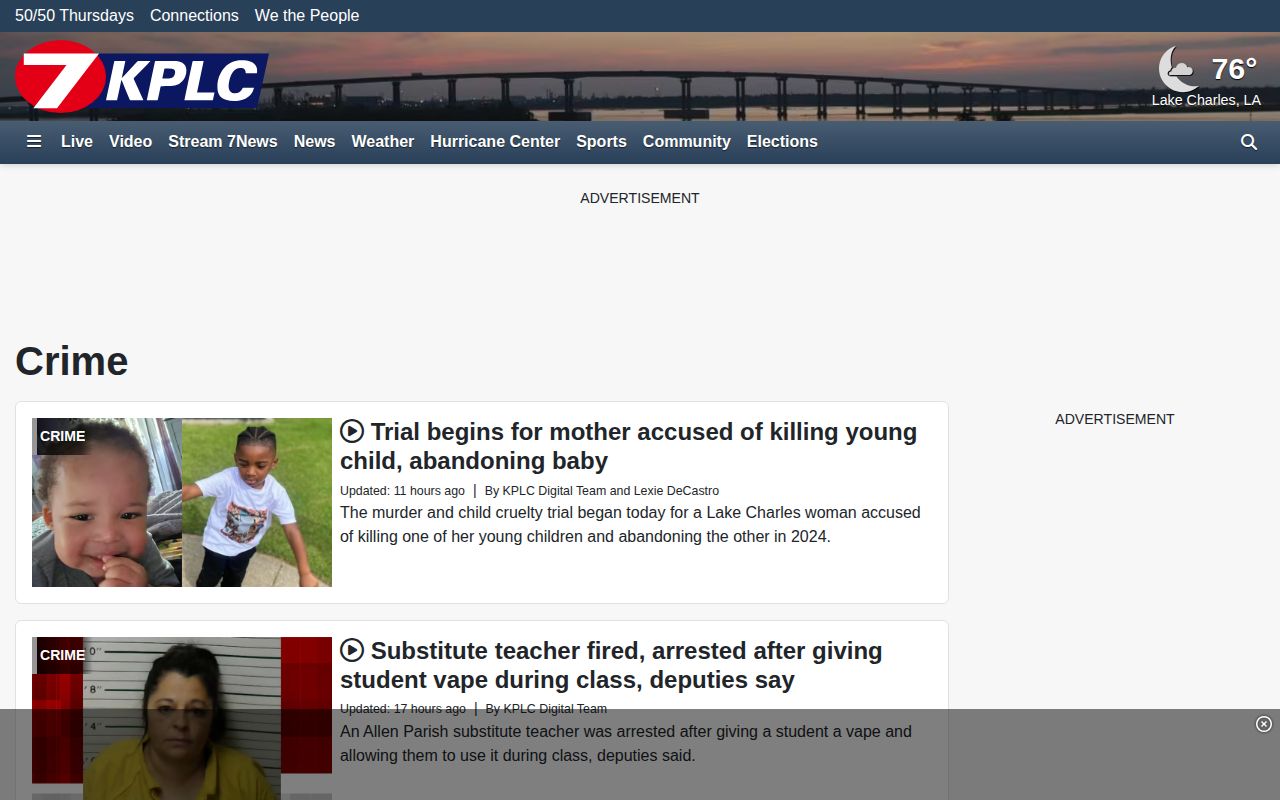
The capture illustrates an editorial category whose order and contents can change.
Fields in a Calcasieu Arrest-List Entry
Fields vary with the publisher. KPLC samples show names, ages, cities, and charges, with occasional bond or detainer facts, while older Calcasieu.info PDFs can carry more booking detail.
| Reported field | Meaning and limit |
|---|---|
| Name and age | Identity clues that still require official confirmation. |
| City | A reported residence or location, not always the arrest place. |
| Charges | Intake-stage charges subject to change. |
| Booking and arrest time | Separate events that some detailed reports show. |
| Bond or detainer | A status fact when supplied, not proof of guilt or release. |
| Photograph | KPLC commonly uses a generic graphic, not a roster gallery. |
American Press arrest lists can include names, ages, addresses, charges, and bonds. A missing field does not mean the official record lacks it. The KPLC sample article shows the prior-day report format.
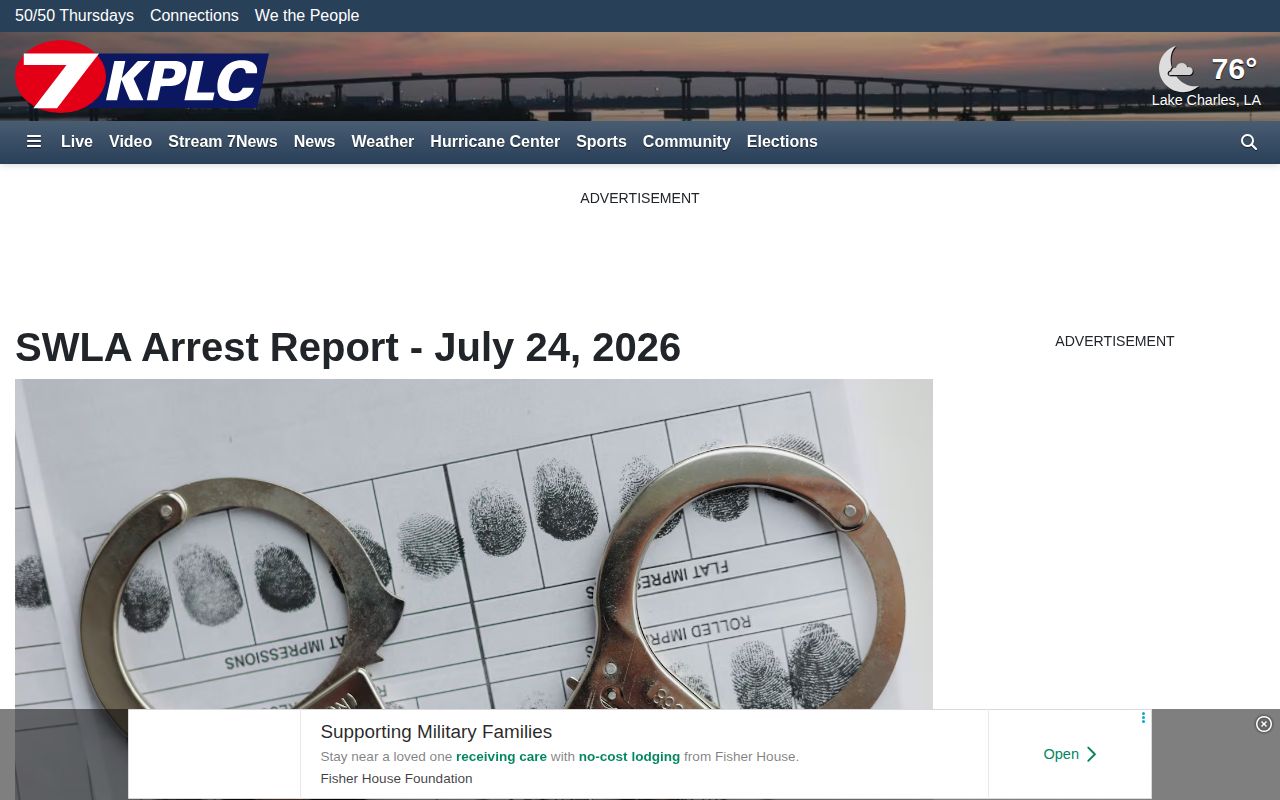
The sample distinguishes dated news coverage from the live CPSO roster.
Weekend Arrest Reports and Monday Catch-Up
A weekend often opens a gap between booking activity and the next news post. KPLC's pattern places Sunday arrests in a Monday morning report. Someone searching on Sunday may not see that report yet. Holidays and editorial schedules cause similar delays. CPSO promises no news timetable. Don't read the delay as a missing arrest. Check the official roster for current custody, or CCC for urgent confirmation. Likewise, an old news entry never proves a person is still jailed.
Calcasieu Parish Blotter Archives and Retention
KPLC exposes consecutive reports but promises no permanent depth. Calcasieu.info keeps an archive-style page of dated arrest reports. Some old PDFs show booking number, booking and arrest times, location, and billing data. That site is privately owned, not a CPSO affiliate. American Press articles follow that publisher's own retention rules. CPSO's roster works differently. It mainly serves current custody, with no fixed online term. A released person may vanish there. The person can still appear in an article and the court index. The Clerk holds criminal records from 1986 forward and criminal minutes from 1993. Archived material spans 1910 through 1985. For an older official booking record, use the CPSO request page. Name the person, the approximate date, the agency, and the exact record wanted. Route incident material to the arresting department and filings to the Clerk.
Local Sources for Calcasieu Parish Arrests
Official sources come first. KPLC is the most regular local news lead on arrests. American Press publishes periodic sheriff arrest lists, and Calcasieu.info offers searchable dated reports. All may cover Lake Charles, Sulphur, Westlake, DeQuincy, and other communities. CCC reporting is parish-wide. The Calcasieu.info archive holds those dated reports.
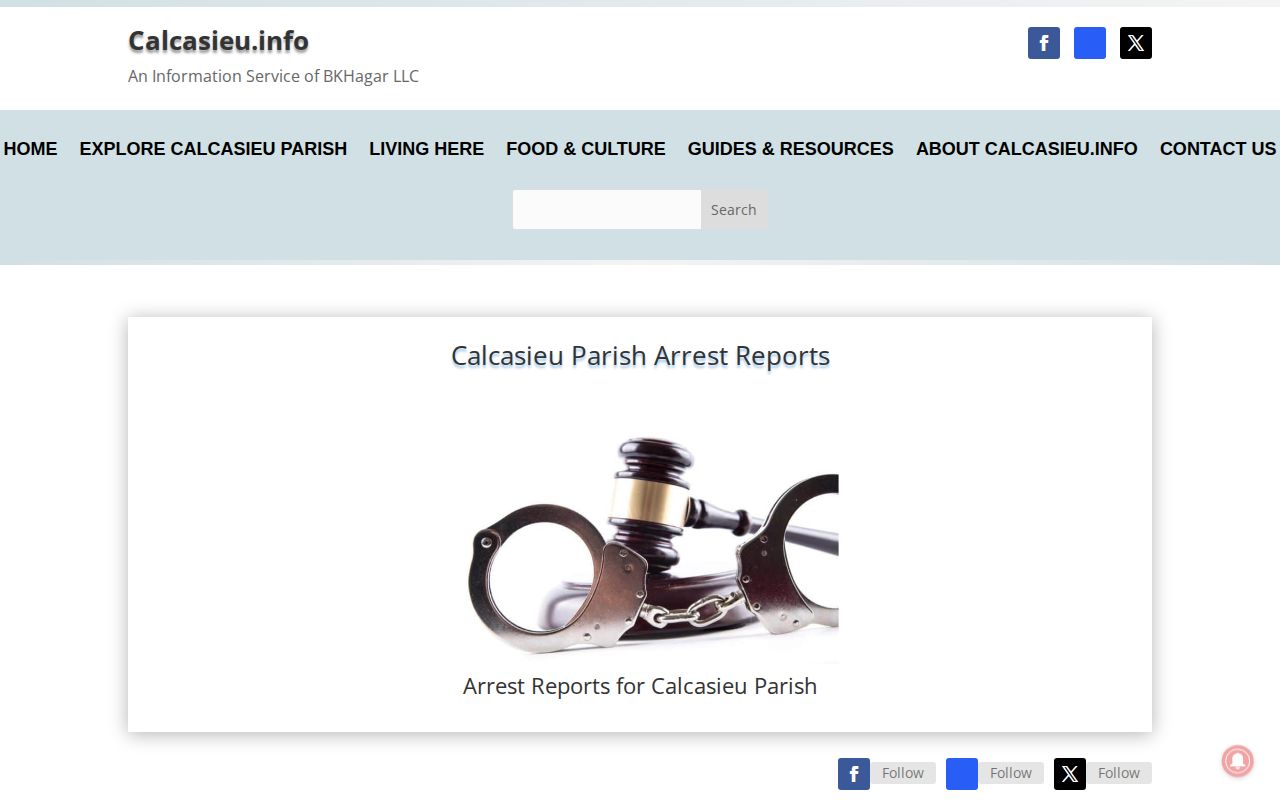
Its unofficial status matters. Each report needs checking against CPSO and the Clerk. News coverage can omit an arrest or preserve an early charge after a case changes. Use it as a lead, noting the official source and access date. No news site replaces a current custody check.
Booking, Custody, and Court Timelines
Booking is jail intake. Custody is a person's present status at a facility or after release or transfer. The court timeline covers filings, hearings, and disposition. A week-old report may stay online after someone leaves CCC. A case can remain active long after the roster entry is gone. Charges in a first report can differ from those later filed. The Calcasieu Parish arrest hub explains the official record paths. Verify identity first. Record the source date and avoid assumptions from a booking photograph. Rely on the final court record for disposition. That three-timeline method makes the multi-day blotter useful without overstating what it proves.
Why the Parish Blotter Is Not a City Log
A CCC arrest report can name people from Lake Charles, Sulphur, Westlake, or DeQuincy. It can even name people from outside the parish. The city label alone proves little. It might be a home address rather than where the arrest happened. It says nothing about which court takes the case.
Each department handles bookings differently. Lake Charles offers a police records route but publishes no daily city booking log. Sulphur runs a municipal jail with its own roster. Some Sulphur arrests surface there before CCC reporting does. Westlake keeps a records function too, though it posts no public booking feed. These gaps explain why a parish news story sometimes leaves your question unanswered.
So work from the agency, not the city. If the incident agency is named, that department holds the incident record. If the booking went to CCC, CPSO keeps the custody and booking record. When neither is identified, don't guess from the town next to a name. Confirm with the official office first.
Photos in Calcasieu Parish Arrest Coverage
KPLC stories often run a generic arrest-report image rather than a grid of booking faces. American Press does the same at times. The CPSO roster works differently. A booking photograph can appear on an individual custody entry there.
Images come and go. A photo vanishes when a person rolls off the roster or the agency changes its display, while a news article may sit online for years. CPSO makes no promise of permanent photo retention.
Treat a news page as news, not as a photo archive. Not everyone named in an article has an official image online. For current policy, check the live CPSO interface. For an older booking photograph, contact CPSO Records and ask about format, fees, and access limits.
Verify a Calcasieu Arrest Beyond the Blotter
Start with the article itself. Check its date and exact wording. Does it call the list a prior-day CCC report or a sheriff arrest list? Or is it a single incident story? Save the URL and the date you checked. Headlines and article placement shift over time.
Next, compare the CPSO roster. A missing name there does not erase the older report. If present custody matters, call the facility holding the person. Then search the Clerk's criminal records and dockets. That shows the procedural trail that follows an arrest. The Clerk cautions that online material is not the official record. Verify any consequential detail with the office.
When the web trail ends, a narrow records request beats a sweeping one. Ask for the booking entry, booking summary, or incident report by name, date, and agency. Some material stays restricted, including active investigations, juvenile cases, sealed and expunged records, and victim-identifying information. Those limits mark legal boundaries, not proof that no arrest happened.